Public art installation by
NVD
On View 9.15 - 11.8 2026
Transfer Warehouse
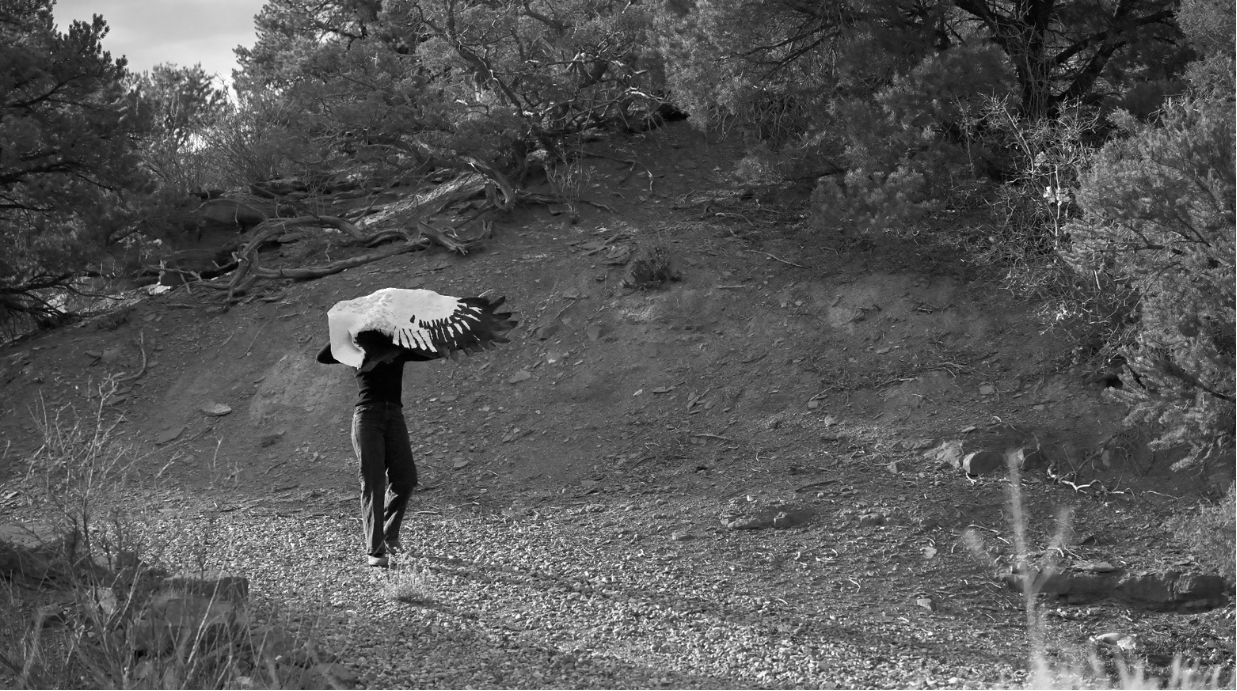
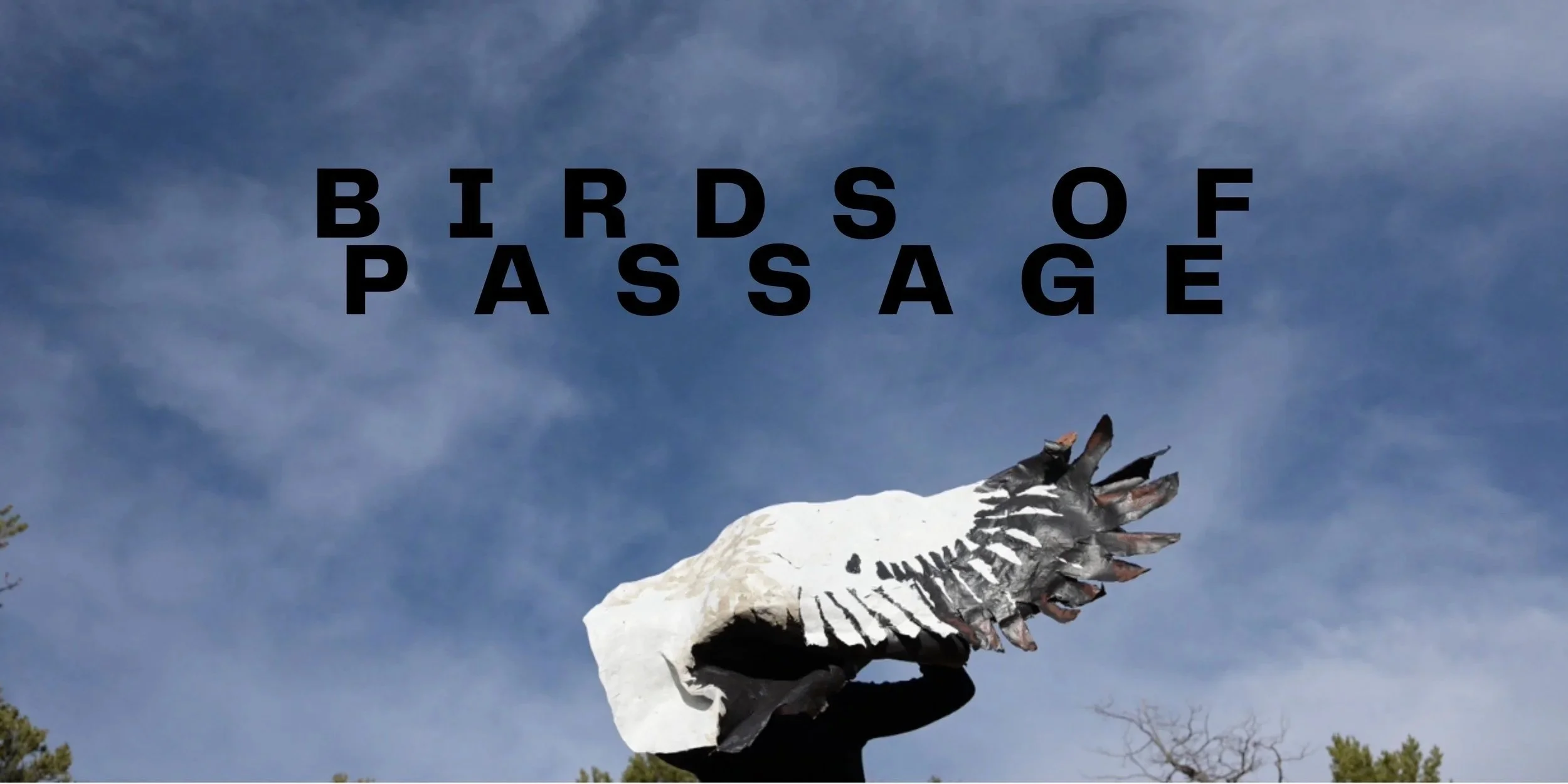
Birds of Passage honors the stories immigrants carry close to the chest, stories of leaving and what leaving costs. We all come from people who moved. Families crossed continents with their gods packed in suitcases. Who flew far so we could stand on this land?
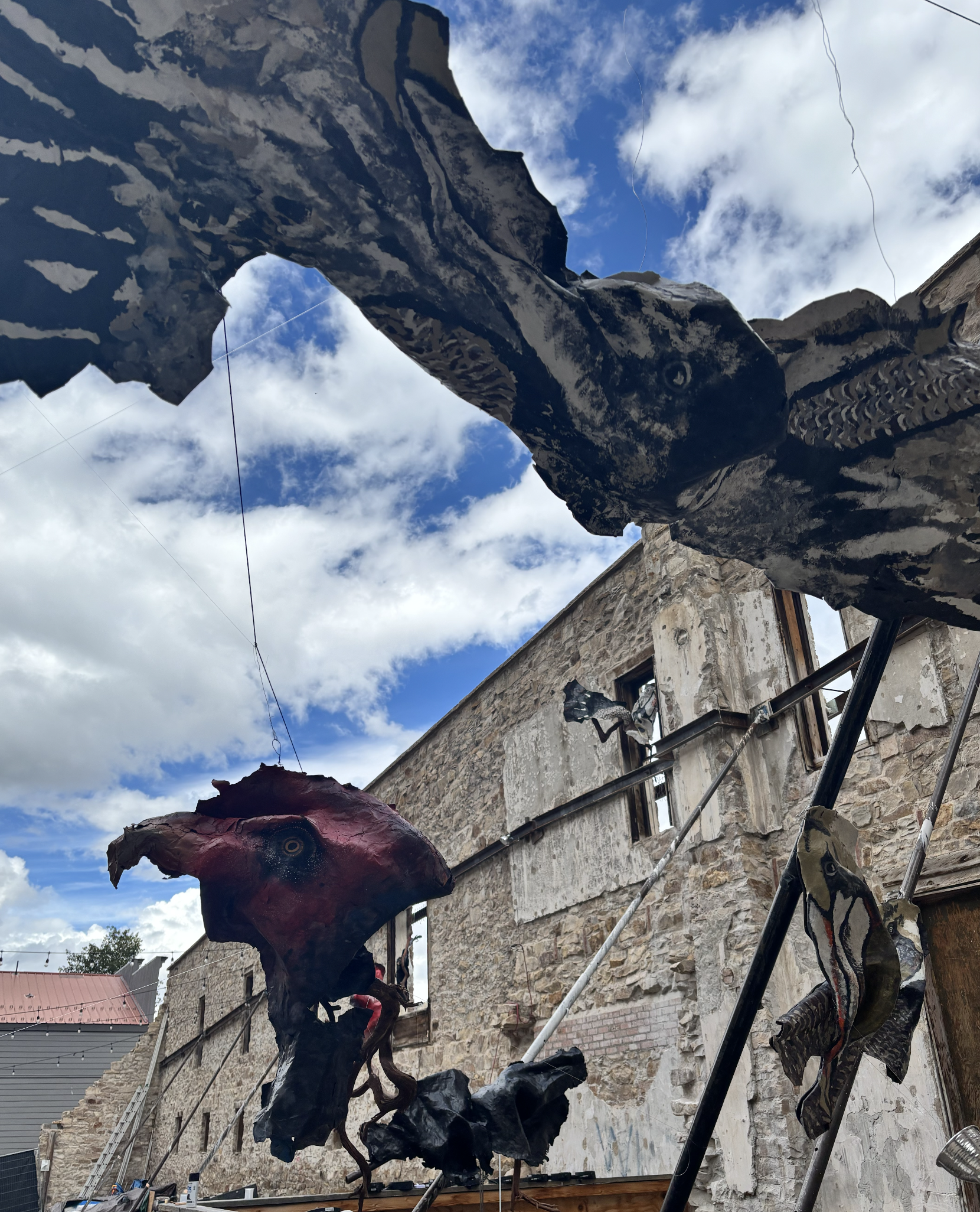
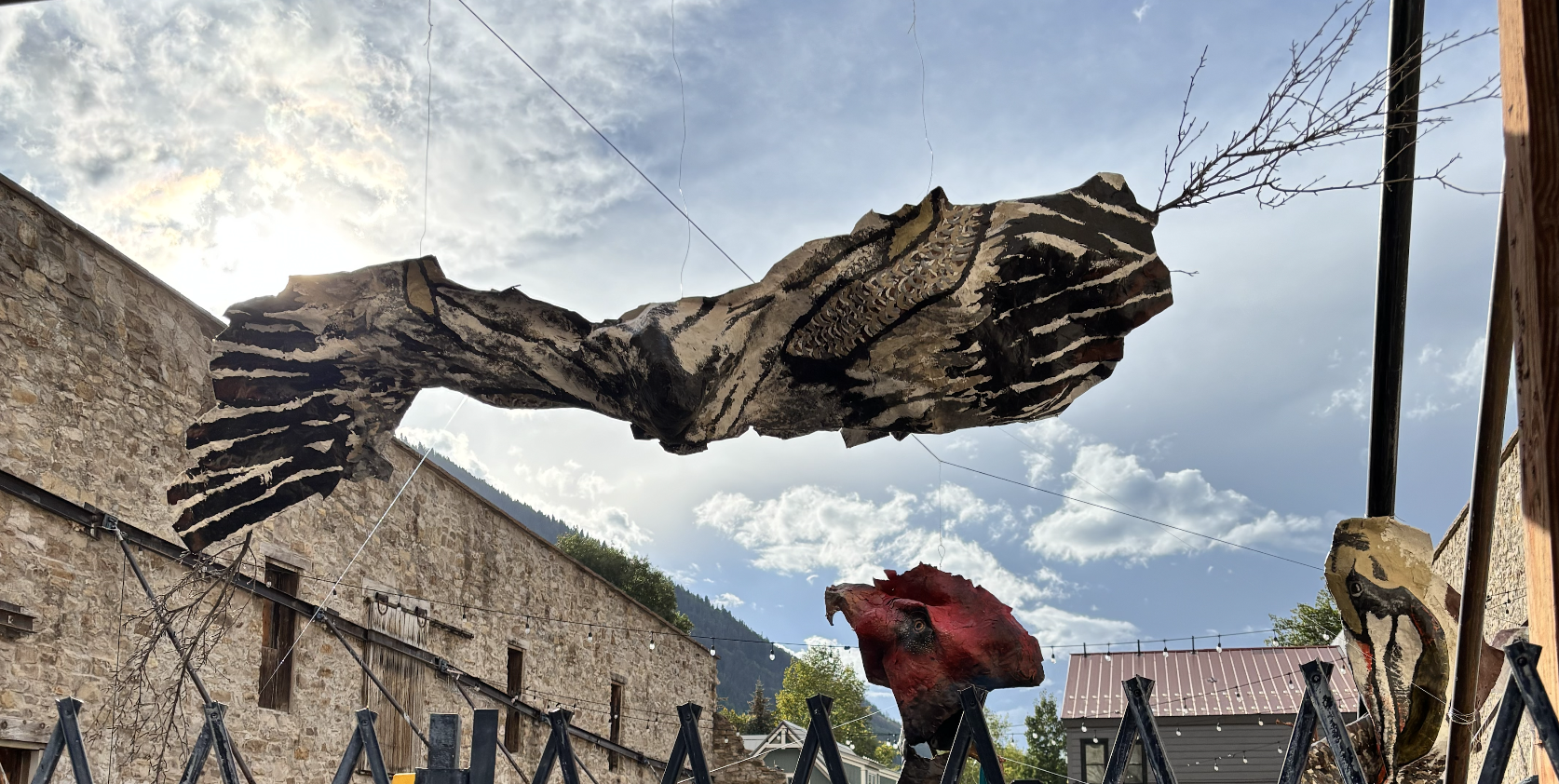
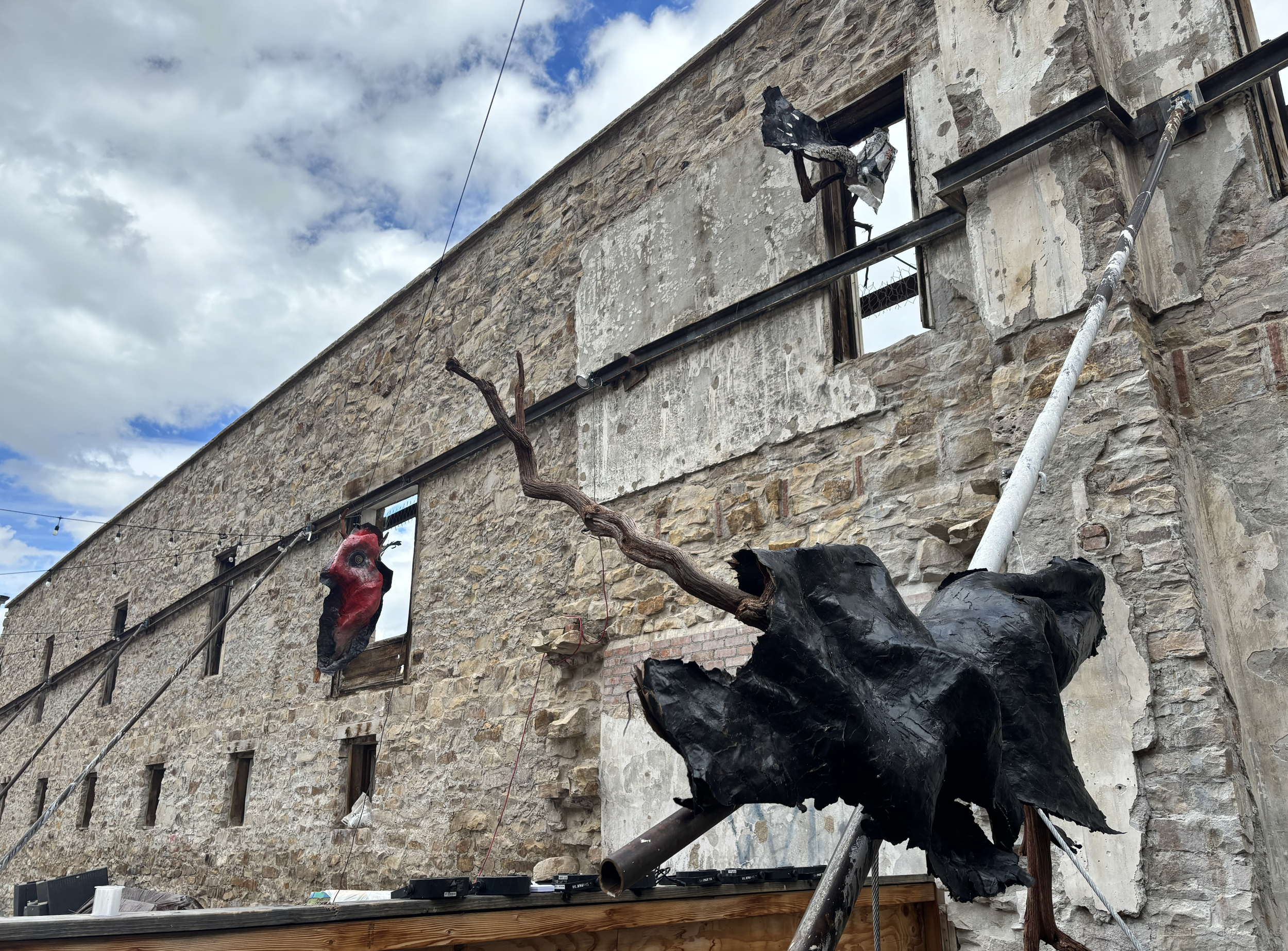
The sculptures are part carcass, part shrine. They honor the pelican and the vulture as our fellow migrants, birds that cross continents scavenging, nurturing, surviving.
In old stories the pelican wounds its own breast to feed its young, and its blood becomes their food. One gesture both feeds and destroys. Immigrants know that double edge. You give up a home so your children can have one. Like the pelican, we give, and we are also what gets given.
The birds' bodies are made from what the world throws away: found cardboard, found wood, scraps, all from Southwest Colorado. They are sculptures that mourn and resist. They refuse to disappear, they resurface what was thrown away. They insist that the migrant, my mother, my pelican, carries the sky inside her, and that all our traveling mothers are still radiant, still alive, unextinguished.
The law protects these birds as travelers. In 1936 the United States and Mexico signed a convention protecting migratory birds "in their movements across the United States of America and the United Mexican States, in which countries they live temporarily." Pelicans were added in 1972. The pelican is protected because it is temporary. It passes through.
People passing through had protection too. Temporary Protected Status let them live here lawfully while home was unsafe. Over the past 5 years it has simply ended, for over 1 million people who held it. The bird still has its law. The mother does not. Who do we choose to protect, and who do we call temporary?
On Process
These birds were built at Steeprock Joinery, in Sawpit, Colorado. The joinery is a woodshop before it is anything else, and has been a shelter and home for so many locals here. My big gratitude to Isabel Harcourt, who stewards that space, and has opened the shop to artists, and to this body of work, again and again. And Sarah Lewiecki who was always there—lifting, holding, and crucially, adding her own artistic take on death and renewal in the show: painting the vultures. Adam Haar introduced me to the slow, patient work of being in a woodshop.
Every rib and wing bone began as wood and cardboard scavenged from around here: junipers up the hill, fencing wire in the shop, flattened boxes rescued before they were hauled off. Nothing was bought new. To scavenge is its own kind of migration – finding a new home for something lost.
Steeprock Joinery hosted the show’s opening, and in its big nest, the birds took flight. Deep Creek Mine and Flying Bear Pizza showed the work early on and I am grateful for the generosity.
And I want to thank the southwest of Colorado—its high desert, its river corridors, its long memory of people arriving with little and building anyway. This place holds its own stories of passage. These birds were made inside them.
Dancers: Amy Schilling, Sarah Lewiecki, Austin Messenger, Emily Arnsten, Keith D’Angelo, Adam Haar
Videographers: Keith D’Angelo, Austin Messenger
Partners: Steeprock Joinery + Telluride Arts
Artist Bio
NVD is a performance artist and sculptor working with bodies, objects, and narrative across puppetry, choreography, and food. Over a decade spanning Singapore, Europe, Alaska, and Vermont, she has worked at the National Gallery Singapore (Simone Forti's Asian premiere, later archived at MoMA), choreographed, performed in cross-cultural exchange with international performers, trained at Bont's Clown School and at Bread & Puppet Theatre. At her residency at Bread and Puppet, she learned to construct monumental puppet figures. Currently working at Steeprock Joinery in Colorado and preparing installations for Sea Pony Farm in Alaska, she continues to ask: how do we tell the stories that matter most?
This commitment to storytelling has deepened through her food and sculptural work. Feeding people and making art that moves them are not so different. In coastal Alaska, she spent four years captaining a small boat and working alongside Indigenous harvesters, learning to cook from the whole animal. She co-founded Outer Coast College and helped organize the Herring Protectors, discovering that ceremony and gathering are themselves forms of knowledge. Her sculptures, most recently Birds of Passage, are always built from what the world discards: pelicans and vultures stitched from netting, rope, and refuse, chosen because they are migrant creatures carrying stories of survival and sacrifice.
Website: niralivd.com
Instagram: @niralivdesai